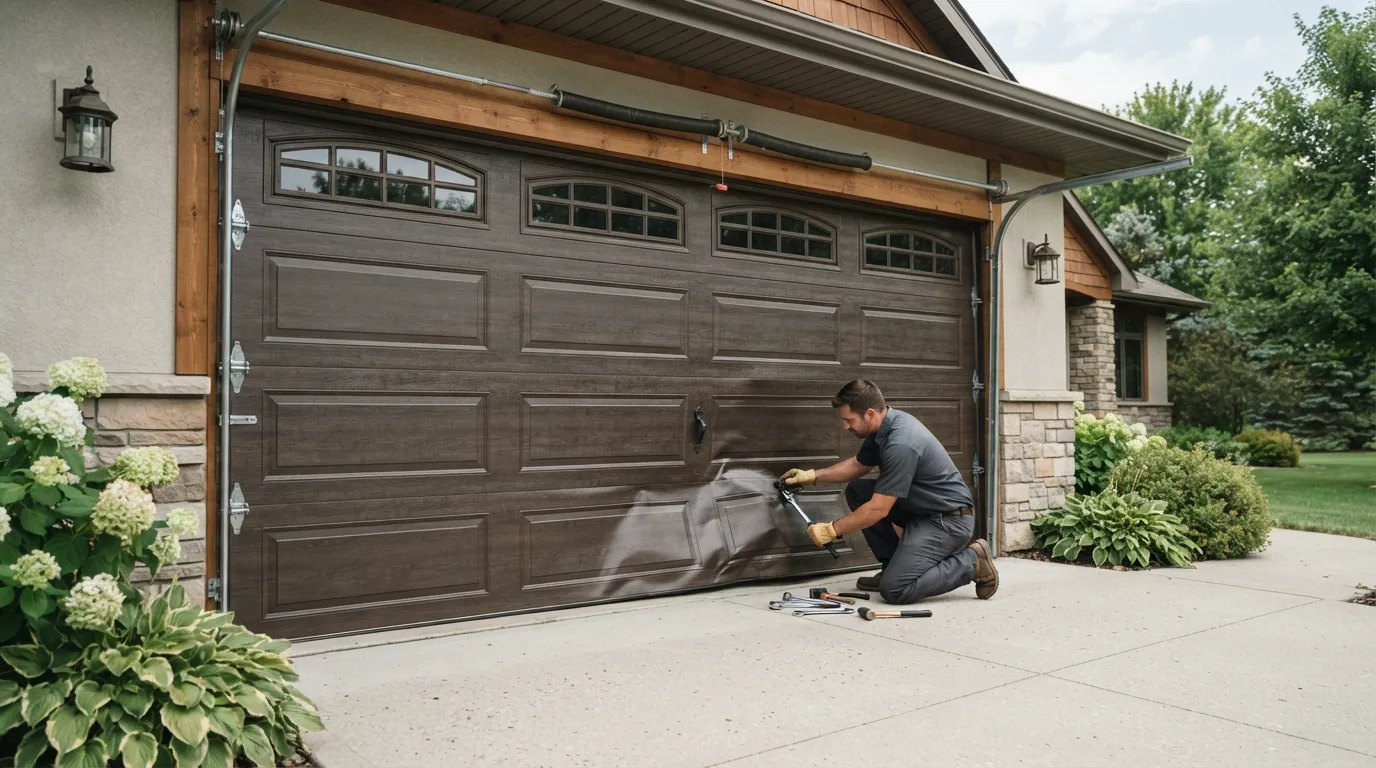
Beaumont sits in a mild climate with occasional freeze, which sounds like it should be easy on a garage door. It is, mostly - no deep freeze-thaw cycles cracking steel the way you'd see further north. What gets doors here isn't the cold, it's the combination of an older door and everyday contact: a trailer hitch backed in too far, a bike handlebar, a basketball. On a newer door with thicker steel, that same contact leaves a scuff. On the 1960s-70s stock that makes up most of the neighborhoods we cover, it leaves a permanent dent or a cracked seam, because the metal's thinner and the panel's been flexing in the heat for decades already.
Humidity plays a part too. Panels on the shaded side of a house, especially on doors original to construction in the 60s and 70s, tend to show rust starting at a dent site faster than a panel that's taken the same hit on a newer door with better coating. Once rust gets into a crack, the panel's structural strength drops fast, and what started as cosmetic becomes a safety issue at the hinge point. That's the pattern we see across this service area more than any single dramatic weather event.