
50-year-old original hardware
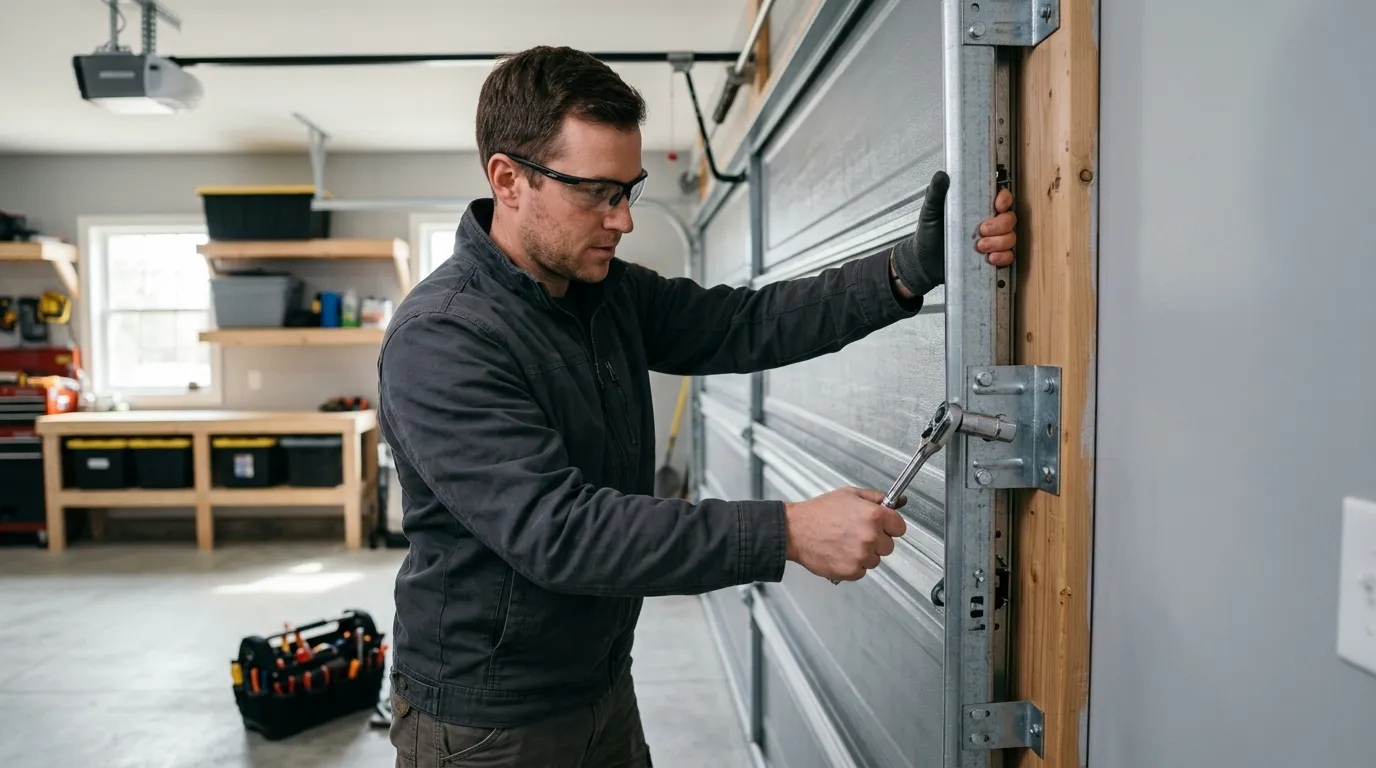
If your door is original to the house, you're looking at hardware pushing fifty years old. There's a real line between what you can safely do and what you shouldn't touch.
Port Neches, Beaumont
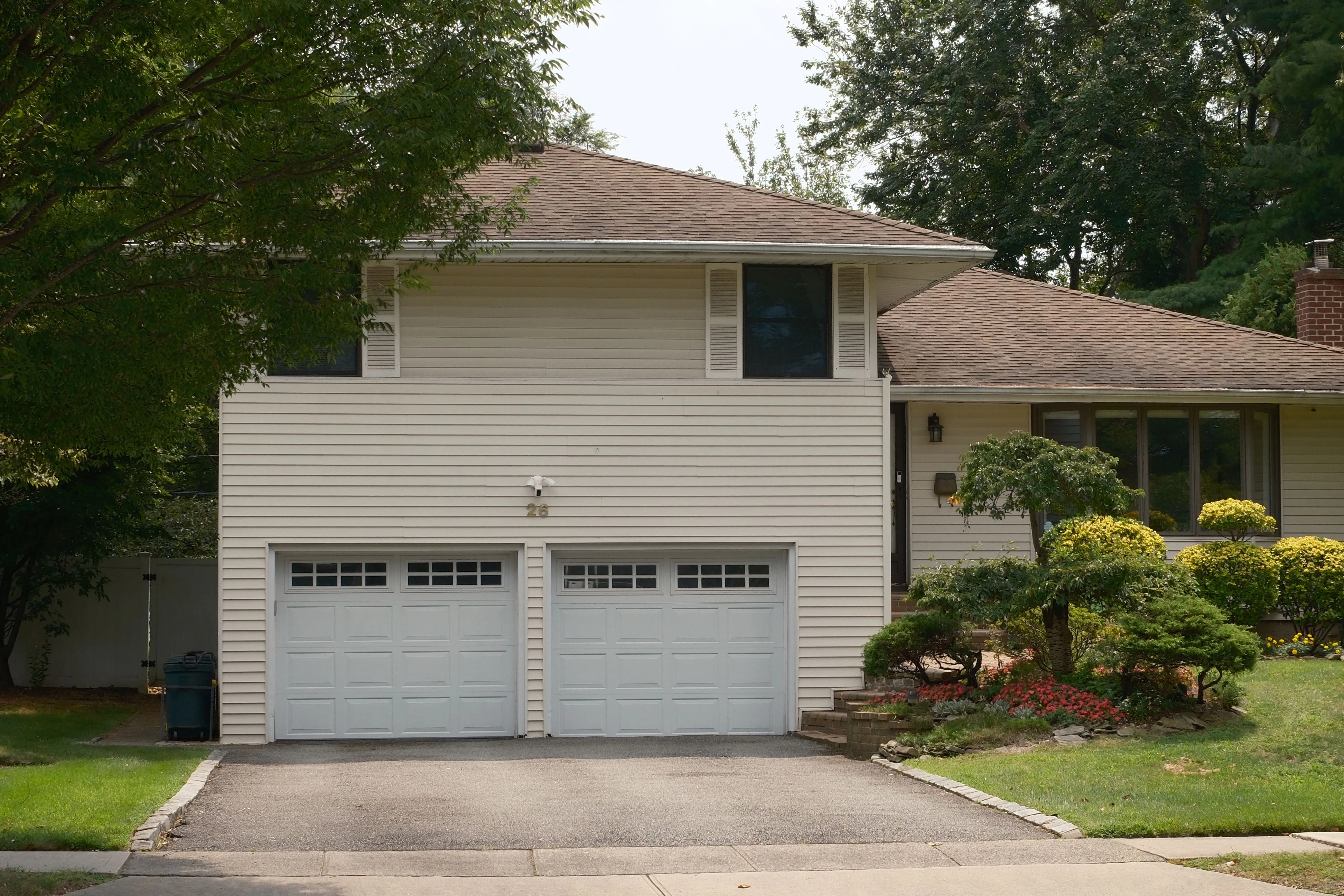
Port Neches homes mostly date to 1972, with hardware built for that era. Beaumont Garage Door Pros drives the 14 miles to fix what that hardware wears out.
DIY or pro
Most houses in Port Neches went up around 1972, a few years past the service area's overall median of 1978. That means a lot of doors here still run on the torsion or extension spring setups that were standard building practice at the time, paired with steel panel doors that were the norm before insulated doors took over.
If your door is original to the house, you're looking at hardware pushing fifty years old. There's a real line between what you can safely do and what you shouldn't touch.
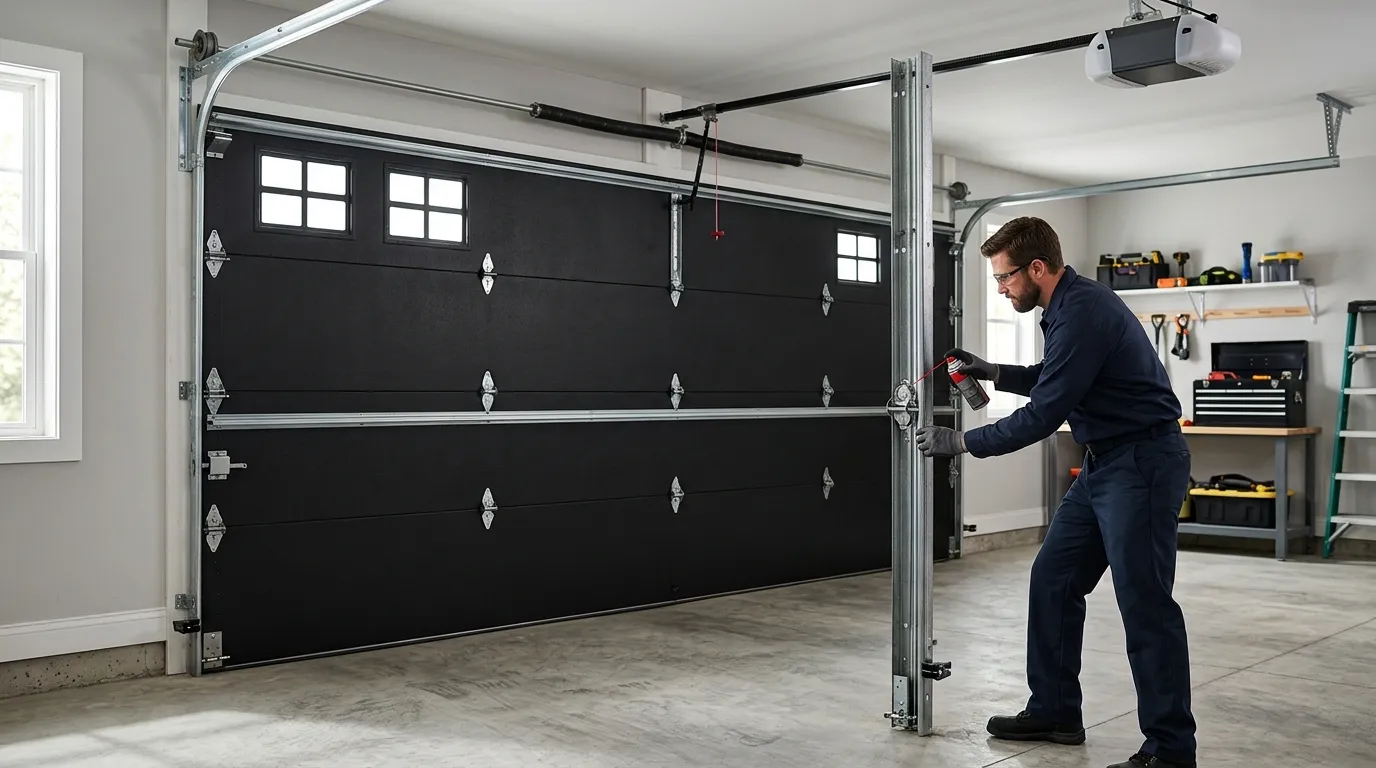
Lubricating rollers, tightening loose hinge bolts, clearing a track of debris, checking that the photo-eye sensors aren't knocked out of alignment - all reasonable weekend jobs. A torsion spring under tension is not.
Those springs store enough force to break a bone or worse, and the winding bars needed to adjust one safely aren't something most homeowners own or have used. If your door won't lift, or lifts unevenly, or the spring itself is visibly separated, that's a call, not a project.
On the truck
Doors and openers from the early 1970s don't always take the same spring wind, drum size, or cable gauge as what's sold new today. Some parts cross over fine. Others - certain drum styles, older torsion bar diameters - take more digging to match, and if your door has been repaired piecemeal over the decades, we sometimes find a mix of eras on one door.
We carry common spring sizes, cables, rollers, and hinges on the truck out of Beaumont. What we're honest about: if your setup needs something unusual, that's not a same-visit part, and we'd rather tell you that up front than promise a fix we can't finish. That's the one limitation worth naming clearly instead of glossing over.

Pricing
Port Neches households run a median income of $84,335, noticeably higher than the $71,837 median across the wider service area we cover from Beaumont.
We don't have a set price list to publish here, and we won't invent one - what a repair costs depends on the spring size, whether the opener needs work too, and how much of the hardware is original versus already replaced.
What we can say: we're coming from Beaumont, about 14 miles out, and that trip is built into how we schedule the day rather than tacked on as a separate charge. If you're comparing quotes, ask what's included - spring replacement alone versus spring plus cable, roller, and hinge inspection are two different jobs even when the symptom looks the same from the driveway.
Symptoms
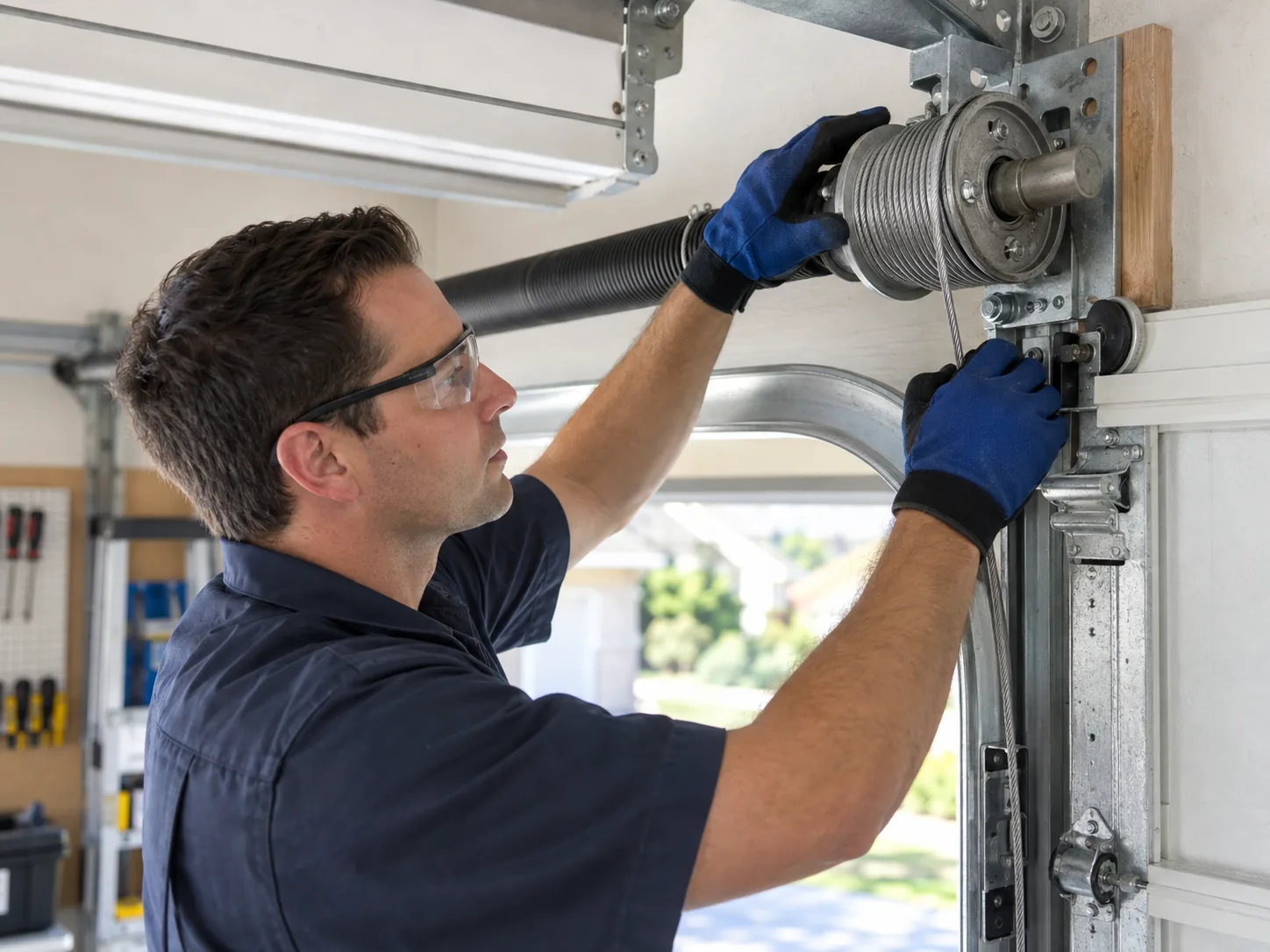
On a door built to 1972-era standards, the failure pattern tends to be mechanical fatigue rather than anything electronic. A spring that's cycled the door tens of thousands of times over five decades doesn't fail cleanly - it usually announces itself first as a grinding or popping sound, then as a door that takes noticeably more effort to lift by hand, then as one side sagging lower than the other when the opener tries to force it up anyway.
Cables fray at the drum end long before they snap outright, and on original hardware that's often the first visible sign something's wrong - a few strands sticking out where the cable wraps the drum. If you're hearing new noise or seeing uneven lift, that's the hardware telling you it's near the end of its run, not a one-time glitch to ignore.

Local causes
The service area sits in a mild climate with occasional freeze, which doesn't sound like much stress on a garage door - and compared to places with hard winters, it isn't. But it does mean lubricant on original 1970s-era hardware goes through more expansion-contraction cycling across the year than owners expect, and grease that hasn't been refreshed in years gets stiff exactly when a cold snap hits, right when the door is being asked to lift a heavier load than usual.
Combine that with hardware that's simply old - springs rated for a certain number of cycles that have long since been exceeded on houses built around 1972 - and you get failures that look sudden but were building for months. It's less about a big weather event and more about age plus season lining up on the same week.
Questions
Most homes in Port Neches were built around 1972, and a good number still have the original door hardware from that era - torsion or extension springs and steel panel doors that were standard construction practice at the time. If yours hasn't been replaced, it's likely close to fifty years old.
No. We're based in Beaumont and drive out to Port Neches, about 14 miles, for calls. There's no separate local branch, so scheduling is coordinated from Beaumont rather than a local dispatch.
We'd advise against it. A wound torsion spring holds enough force to cause serious injury, and the tools to safely adjust or release one aren't standard homeowner equipment. Smaller tasks like lubricating rollers or clearing tracks are fine to do yourself.
For common spring sizes, cables, rollers, and hinges, yes. Some older hardware from the 1970s uses drum or bar sizes that take more sourcing, and we'll tell you honestly if that's the case rather than promise a same-visit fix we can't deliver.
Explore more
Ready when you are
Beaumont Garage Door Pros repairs and installs garage doors, springs and openers in Beaumont, TX and the surrounding area.