
Guide
Why Beaumont's Garage Doors Age the Way They Do
Most Beaumont garages went up between 1966 and 1998. Here's what that build era and this mild, someFreeze climate actually do to the doors and hardware.
Local detail
Season by Season
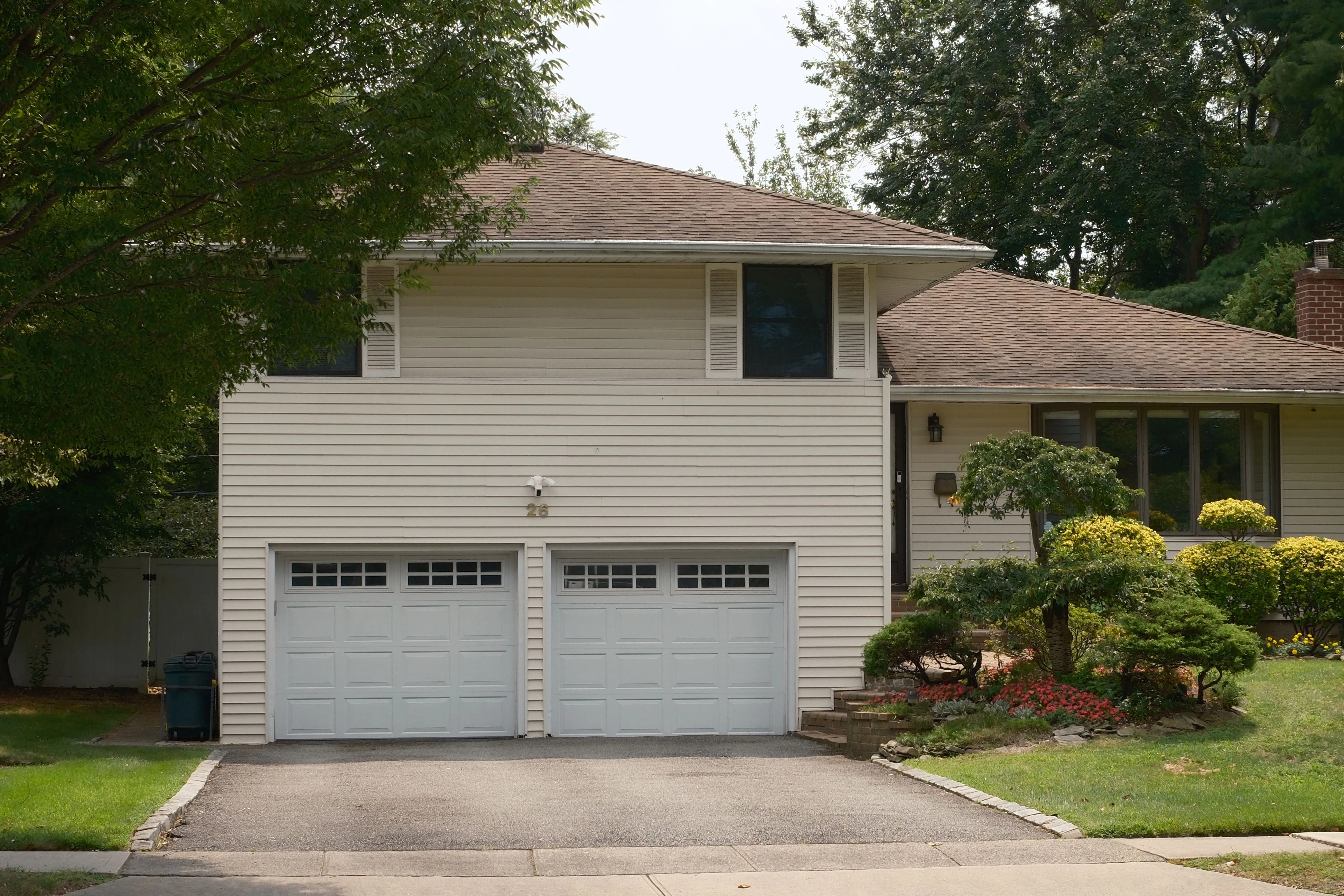
There isn't a hard winter here to mark the calendar, but the mild-with-occasional-freeze pattern this area sits in still does its work on a door, just slower and quieter than up north. A cold snap that dips below freezing for a night or two doesn't crack concrete the way a real freeze-thaw cycle does, but it's enough to stiffen the lubricant in a spring that hasn't seen grease since the Carter administration. Summer is the bigger stressor here - long stretches of heat and humidity that swell wood jambs on the older houses and dry out nylon rollers on anything installed since. Most of what we're called out to see was built between 1966 and 1998, with the median sitting right at 1978, so the door itself is often newer than the house but the opener and hardware are whatever generation got bolted on last.
Spring is when people notice - the door that limped along all winter finally won't lift, because the metal fatigue that built up over a mild but humid year finally catches up with a spring that was already tired. None of this is dramatic weather. It's cumulative weather, and a 1978-era torsion setup doesn't get a pass just because the freezes here are mild.

The area
What the Weather Here Does to It
A someFreeze climate band is a strange middle ground for a garage door. You don't get the violent expansion and contraction that snaps cables in Minnesota, but you also don't get the dry, stable air that lets hardware sit untouched for decades in Arizona. What you get instead is slow oxidation - humidity working on exposed springs and track bolts year-round, with just enough cold nights each winter to make brittle metal that's already rusting a little more likely to fail on the coldest morning of the year rather than a random Tuesday in July.
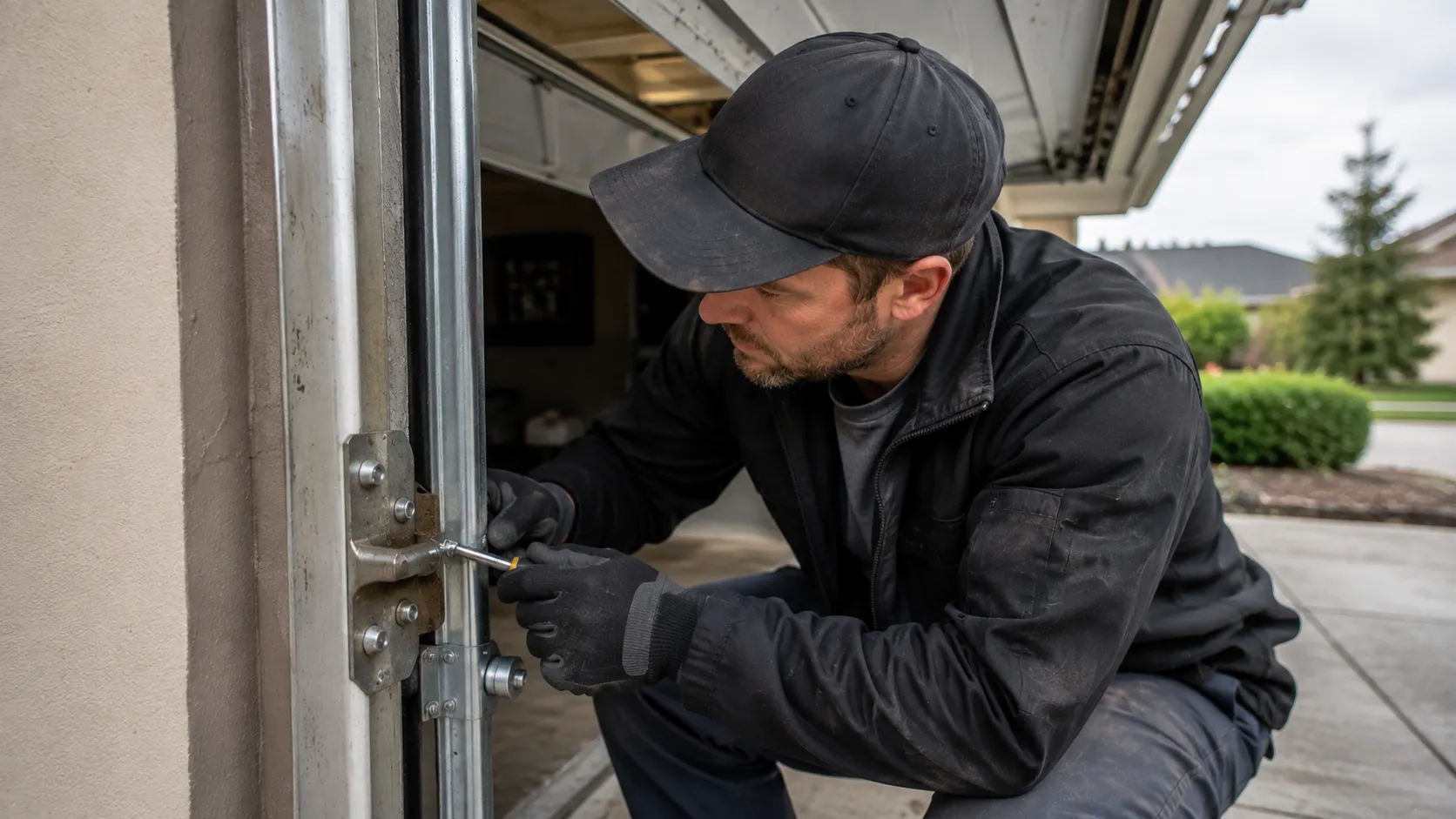
Houses built in this area's dominant 1966-1998 window were framed to the codes of their decade, which didn't anticipate the kind of continuous overhead-door use a modern two-car household puts on an opener. The original torsion hardware on a lot of these doors wasn't engineered as long-life equipment; it was engineered to the standard of its year, and that standard is now fifty-some years old on the oldest end of the range. Add humidity-driven rust to a spring rated for a lighter cycle count than a modern one, and you get failures that show up first as noise, then as a door that won't fully close, then as a snapped spring on a cold morning.
What we find
The Problem
The core issue in this service area isn't bad installation - it's original installation. A door and opener put in when a house was built in 1972 or 1985 was sized and sprung for that door, that garage, that era's expectations. Fifty years of Gulf Coast humidity later, the galvanizing on the spring coils is thinner than it looks, and the bearing plates at the ends of the torsion shaft have corroded just enough to bind under load.
Across the sixteen named communities this shop covers - everywhere from Rose City and the Oaks Historic District close in, out to Vidor, Nederland, and Port Arthur - the housing stock skews the same way: mostly 1960s and 70s construction, with newer infill mixed in but never enough to change the overall picture. That means the failure pattern is predictable. It's rarely a brand-new door failing.
It's the original spring, the original rollers, sometimes the original opener motor, all reaching the end of a service life nobody tracked because nobody thought to. The honest limitation here: if a door and opener are both original to a house built before 1980, we're usually not chasing a single repair. Patching one part on hardware that old just moves the next failure a few months down the road.
How we work
Where People Go Wrong
The most common mistake we see is treating a noisy door as a lubrication problem when it's actually a metal-fatigue problem. Spraying WD-40 on a spring that's rusted from the inside doesn't restore the tension it lost; it just quiets the symptom for a week. The second mistake is assuming a door that still opens is a door that's fine.
With 36,981 owner-occupied houses in this service area, a lot of them are running the same original torsion setup that shipped with a 1970s-era garage, and a spring under too little tension doesn't announce itself - it just makes the opener motor work harder until the motor, not the spring, is what finally gives out. Third: people wait for full failure before calling anyone, which turns a $200 spring swap into an opener replacement too. Given a median household income of $71,837 in this area, that's the math we walk people through - spend on the part that's actually worn, not on whichever part happened to break loudest.
We won't tell you to replace a door that's mechanically sound just because it's old. Plenty of the 1978-era doors in this area are structurally fine; it's the springs and rollers doing the aging, not the panels.
Questions
Common questions
Why does my garage door only act up in the morning?
Cooler overnight temperatures stiffen old grease and shrink metal slightly, which is enough to make a spring that's already lost tension bind right at the point it needs the most force. By afternoon, once things warm up, it can loosen up and seem fine - which is why people put off calling until it fails outright.
Is my door's age actually a problem, or just the hardware?
Usually the hardware. Most houses in this area were built between 1966 and 1998, and the door panels themselves often outlast the springs, rollers, and cables by decades. We check the panel condition separately from the moving parts - replacing one doesn't always mean replacing the other.
Do I need anything special for the humidity here?
Not special equipment, but different maintenance timing. In a mild, someFreeze climate like this one, rust from year-round humidity is a bigger threat to hardware than cold ever is. Springs and hinges benefit from a check more often than the twice-a-year schedule that makes sense in drier or colder regions.
Ready when you are
Need a garage door sorted in Beaumont?
Beaumont Garage Door Pros repairs and installs garage doors, springs and openers in Beaumont, TX and the surrounding area.