
Guide
What Your Garage Door Is Trying to Tell You in Beaumont
Beaumont homes built between 1966 and 1998 develop specific garage door noises as hardware ages under mild, humid coastal weather. Here's what each one means.
Local detail
Season by Season
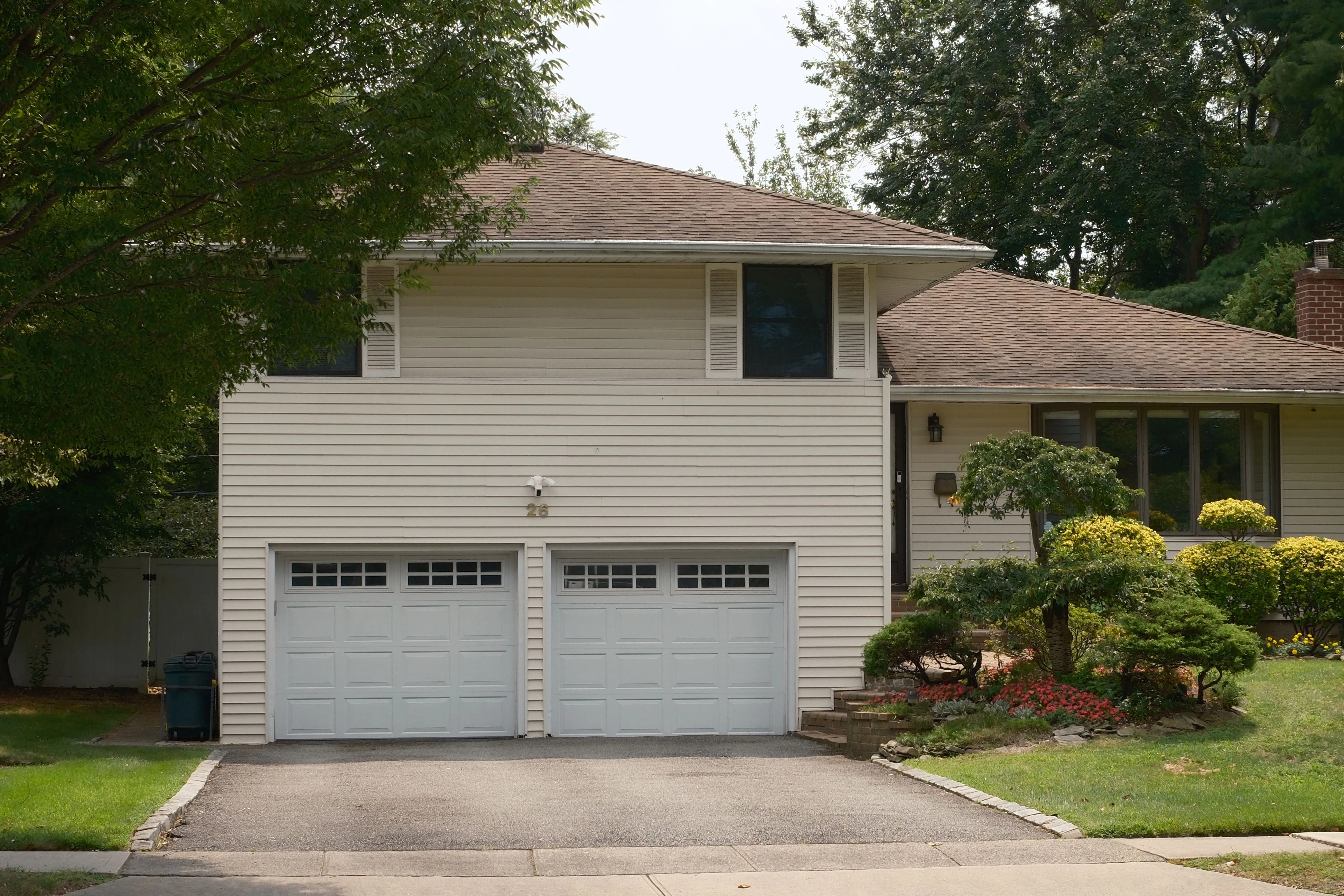
Beaumont sits in a mild climate band with occasional freeze, which is a different animal from a hard winter town. That matters for how your door sounds through the year. Through the humid stretch, steel hardware swells and contracts just enough that a spring under tension starts to sing a low groan on the way up. Come the handful of freeze mornings each year, grease that's thinned out in the heat all summer suddenly stiffens, and a door that was quiet in July will bark and hitch on a 38-degree morning in January.
This isn't a two-season story like it is up north. It's a slow year-round cycle of expand, contract, dry out, seize up, repeated on hardware that in a lot of Beaumont garages has been doing this same dance since the house was built between 1966 and 1998. The noise you hear in March isn't the same noise you'll hear in August, even on the same door, and that's the local pattern worth knowing before you decide a sound means something is broken.

The area
What the Weather Here Does to It
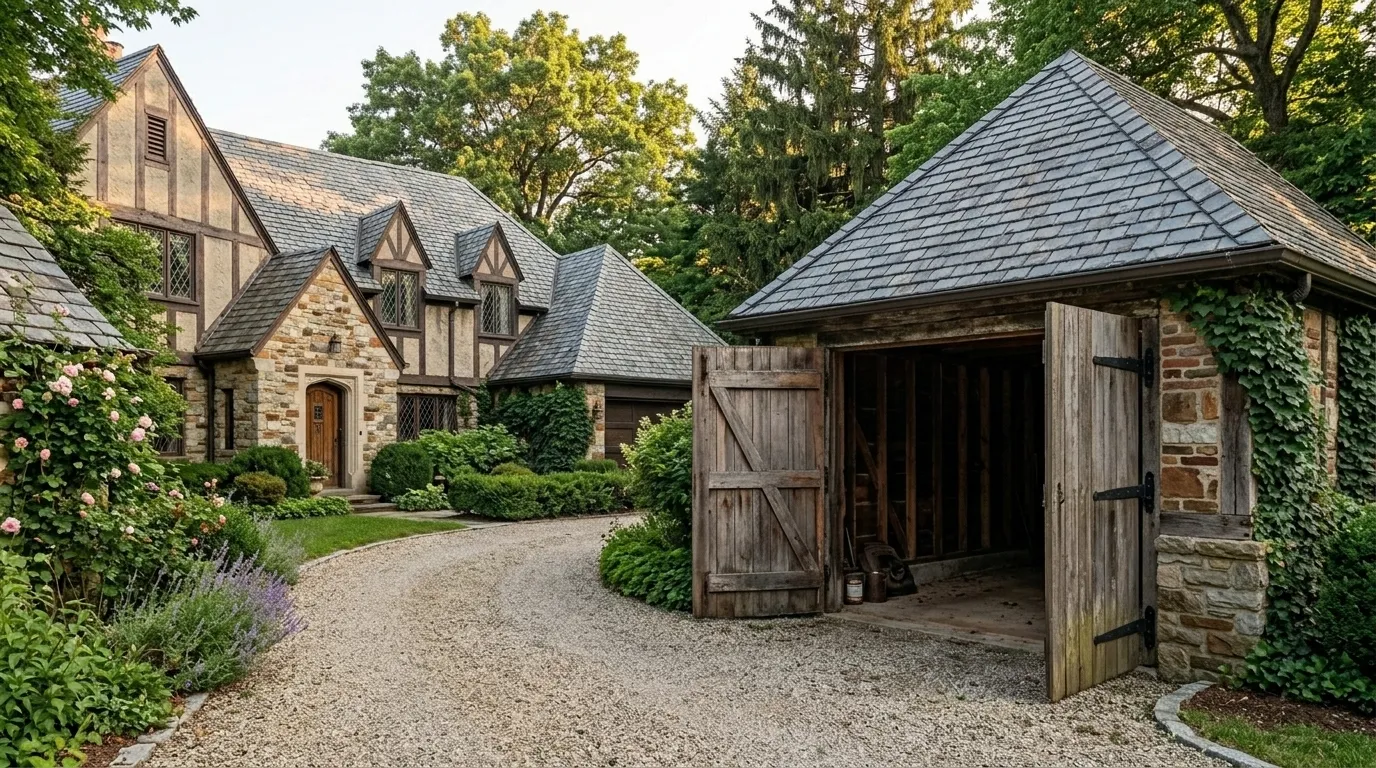
Mild-with-occasional-freeze doesn't mean gentle. It means humidity does the slow damage that cold does elsewhere, just quieter. Track brackets and spring coils on houses from the 1966-1998 build era have had decades of damp air working into the zinc coating, and once that coating goes, the bare steel underneath starts to pit. A pitted track doesn't roll smooth anymore, so rollers judder against it, and that's where a lot of the rattling and grinding comes from on doors that are otherwise mechanically fine.
Springs age the same way from the inside, coil against coil, and the squeal you hear isn't the spring failing this second, it's metal that's lost its factory lubrication rubbing dry. None of this shows up fast. It's cumulative, which is why a door can run quiet for years and then get noisy over one humid summer, not because anything sudden happened, but because the coating finally wore through.
What we find
The Problem
Across the older sections of the service area, from the Oaks Historic District out to Vidor Ward 6 and Westbury, a lot of garages are still running the hardware that came with the house. That's a 1960s-70s to late-90s spread, F1 and F2 both point the same direction: original torsion springs, original steel rollers, original track brackets, on houses that median out around 1978. Hardware that old wasn't built to run silent forever, and it wasn't built with the sealed bearings you'd get in a new roller kit today.
So the noise isn't a mystery, it's math. A 45-year-old spring coil rubbing on itself sounds different from a fresh one. A steel roller with flat spots from decades of use sounds different from a nylon one.
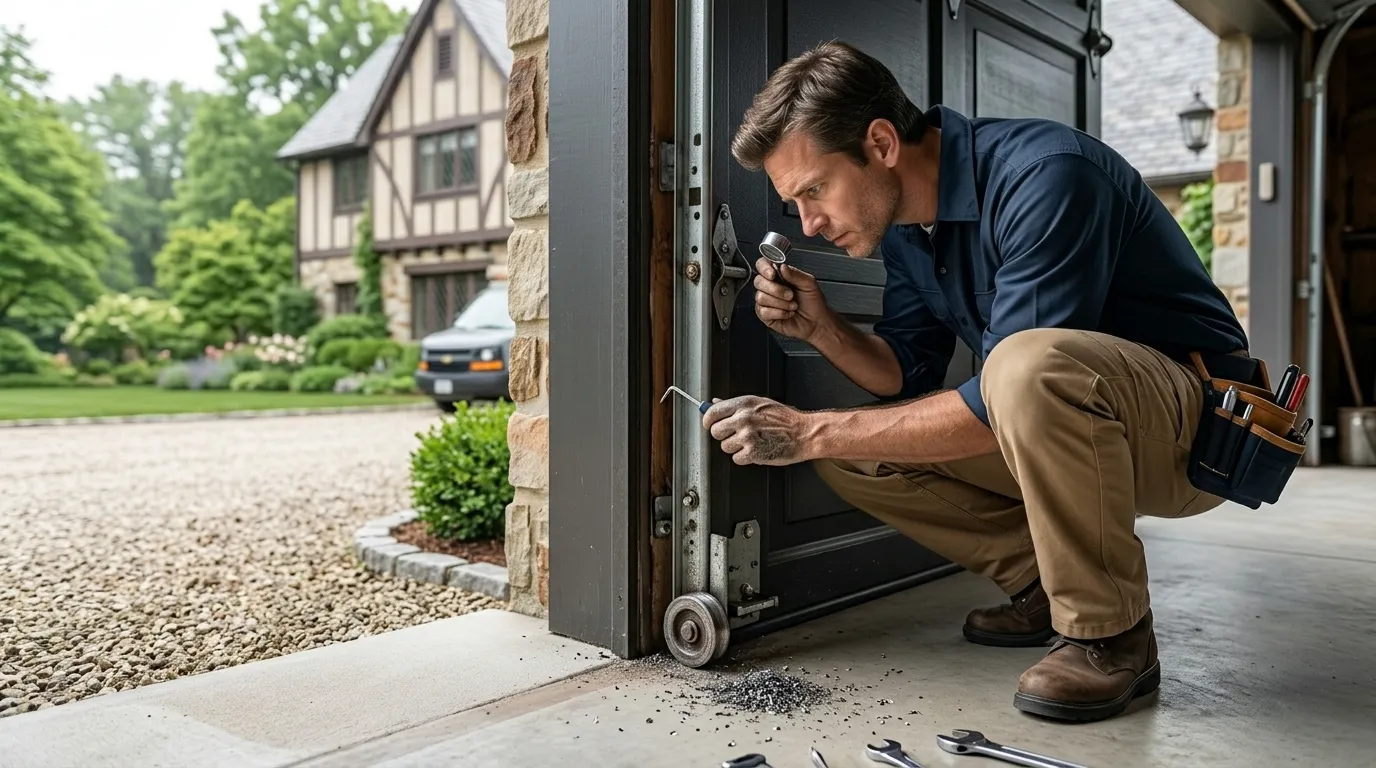
The honest limitation here: we can't tell you from a description alone whether your specific noise is a $40 lube job or a spring that's a season from snapping. That needs someone looking at the actual coil.
How we work
Where People Go Wrong
The most common mistake we see across this area, households from Rose City's edge out through Nederland and Silsbee, is spraying WD-40 on a noisy track and calling it fixed. WD-40 is a solvent, not a lubricant, and on old steel it strips what grease is left instead of adding any. The second mistake is ignoring a rhythmic thump because the door still opens fine. On hardware from the 1966-1998 era, a thump on every rotation is usually a flat spot on a roller or a bent track bracket, and it gets worse, not better, especially once the humid months roll back around and rust gets into the flat spot.
With median household income across the service area at $71,837, most people here are trying to catch a repair before it becomes a replacement, which is the right instinct. The mistake is waiting for the noise to get loud enough to be scary instead of loud enough to be new. New is the signal worth acting on.
Questions
Common questions
My garage door makes a loud bang once when it opens. Is that the spring?
On a house from Beaumont's typical 1966-1998 building stock, a single bang on opening is often a torsion spring that's finally lost tension, not one that's about to snap. It can still fail without warning, so treat the bang as a call-it-in noise, not a wait-and-see one.
Why is my door quieter in summer and noisier in winter?
Grease thins out in the mild heat we get most of the year, then stiffens on the handful of freeze mornings each winter. A door that ran smooth all summer can hitch and grind on those cold mornings simply because the lubricant hasn't caught up to the temperature swing yet.
Is a grinding noise always the rollers?
Not always. On older track hardware common across this area, grinding can also come from pitted brackets or a bent track rubbing the roller wheel rather than turning with it. Both sound similar from inside the garage, which is why we don't diagnose it over the phone.
Can I just lubricate everything and hope the noise goes away?
Sometimes, if the noise is dry metal on metal and the hardware underneath is still sound. But on doors from the 1960s-70s stock common here, lubricant can't fix a pitted track or a roller with a flat spot, and spraying the wrong product on old steel can make things worse.
Ready when you are
Need a garage door sorted in Beaumont?
Beaumont Garage Door Pros repairs and installs garage doors, springs and openers in Beaumont, TX and the surrounding area.