
Guide
What 1970s Beaumont Garage Doors Deal With All Year
Most Beaumont garage doors date to 1966-1998, median 1978. Here's what Gulf humidity and rare freezes do to that hardware, and where repairs go wrong.
Local detail
Season by Season
Beaumont sits in a mild climate band with occasional freeze events, not the kind of place where a door sees hard frost for months at a stretch. That matters for how you should think about the calendar. Spring and fall don't ask much of a door beyond normal use - this is when small problems (a roller starting to bind, a cable fraying at the drum) are easiest to catch before they become a Saturday-morning no-start. Summer heat expands steel panels and can tighten up an already-marginal track alignment, which shows up as a door that struggles halfway through the cycle.
Winter is short here, but it isn't zero: on the handful of nights a year the temperature drops into freeze range, torsion springs that have gone soft with age lose tension fast and are far more likely to let go right then, because cold steel is less forgiving of the fatigue that's already built up. That's the pattern across this area - not a brutal winter, but a sharp one-week window where age-weakened hardware fails at a worse rate than the other fifty weeks combined. Owners who get ahead of it check spring tension and lubrication before that window rather than after.

The area
What the Weather Here Does to It
A mild-with-occasional-freeze climate is deceptively easy on doors most of the year and then unforgiving for a short stretch. Humidity swings in this region work springs and hinges through more expansion-contraction cycles than a drier climate would, which speeds up the fatigue that eventually shows as a spring losing coil tension or a hinge developing play. None of that is dramatic on its own. The trouble comes when a freeze event lands on top of hardware that's already fatigued - a spring that's been quietly weakening all year is the one that snaps on the cold morning, not the newer one.
Steel tracks and panels also contract slightly in a freeze, which is enough to turn a track that was a quarter-inch out of alignment into one that binds a roller. We don't get the deep-freeze cycles that crack concrete slabs or split wood jambs the way a true winter climate does, so the damage here is almost always in the moving hardware, not the structure around the door. That's a narrower problem than owners in colder states deal with, but it's a real one, and it concentrates in a short window instead of spreading evenly across the season.
What we find
The Problem
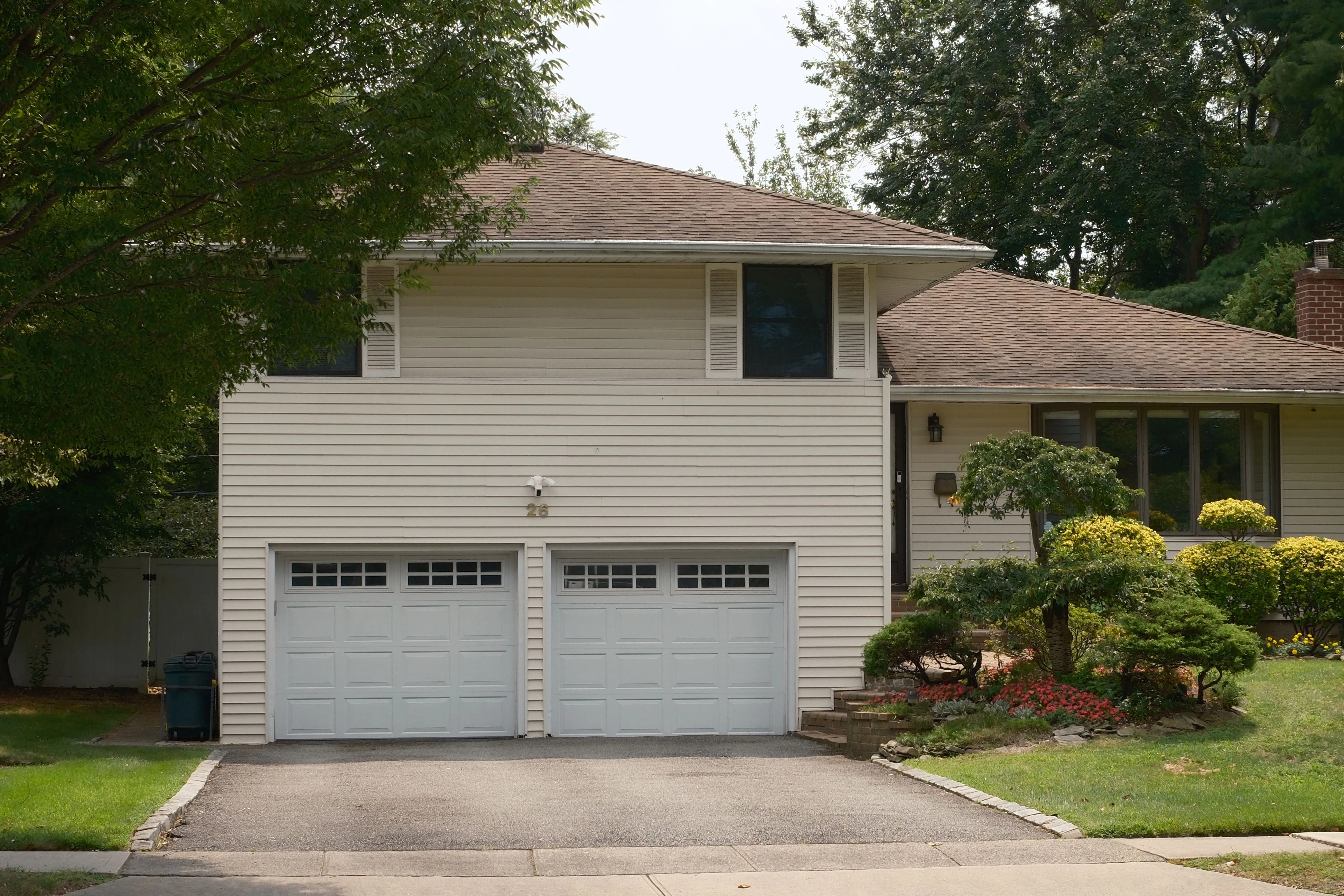
Housing across this service area mostly went up between 1966 and 1998, with the median build year at 1978 - that's true across the sixteen named communities we cover, from the closer-in Oaks Historic District two miles east to farther-out spots like Silsbee and Sour Lake. A door installed when a house was built in the late 1970s is now old enough that its spring has gone through several decades of the humidity-and-occasional-freeze cycle described above, whether or not it's ever been serviced. Across 60,862 households and 36,981 owner-occupied houses in this area, that adds up to a lot of original torsion hardware still doing daily work on a bearing and coil design that was never meant to run this long unchecked.
The specific problem isn't that these doors are bad - 1970s steel sectional doors were built solidly. It's that nobody replaces a spring on a schedule; they replace it when it breaks, and in this climate, it tends to break on the one cold morning a year rather than during the other 350 mild ones, which makes it feel random when it's actually predictable.
How we work
Where People Go Wrong
The most common mistake we see is lubricating a squeaky track and calling the job done, when the squeak is coming from a spring that's already lost a coil of tension - grease doesn't fix fatigue. The second is waiting for a full failure before doing anything, which usually means the freeze-week breakdown instead of a scheduled fix on a mild Tuesday. At a median household income of $71,837 across this area, most owners we talk to are making a real cost decision, not defaulting to the most expensive option - and that's fair, but it only works if you know which repair is actually a repair and which is a house calling for a new door.
A door from the 1966-1998 build wave with a rusted-through bottom panel and an out-of-date opener usually isn't worth chasing with parts anymore; a door with a snapped spring on an otherwise sound frame almost always is. One honest limit: if a spring or panel is a discontinued size from that era, we may need a few days to source the part rather than same-day - that's the tradeoff of hardware this old, and it's worth knowing before you're standing in a cold garage at 6 a.m.
Questions
Common questions
Why did my spring snap on the one cold night we had all year?
Springs here fatigue gradually through the mild, humid stretch of the year, and a freeze event is simply the moment cold steel has the least give left. The spring was already weak; the cold night is what finished it, not what caused it. Regular tension checks before winter catch this before it happens.
Is my original door from the 1970s worth repairing or replacing?
Depends what's wrong. A snapped spring or worn cable on a sound frame is almost always worth fixing. Rust-through on panels or a frame that's racked from decades of use usually isn't - at that point you're paying for parts on a door that's fighting you anyway. We'll tell you straight which side yours is on.
Do I need to do anything special before winter here?
Nothing dramatic - this isn't a hard-freeze climate. But a quick check of spring tension and hinge play before the first freeze week catches the failures that would otherwise happen at the worst possible time. Ten minutes in November beats a broken spring in January.
Ready when you are
Need a garage door sorted in Beaumont?
Beaumont Garage Door Pros repairs and installs garage doors, springs and openers in Beaumont, TX and the surrounding area.