
Guide
Why a Door Goes Off Track in Beaumont
Beaumont's 1966-1998 housing stock and mild, occasionally freezing climate combine to loosen track brackets and pull rollers out of line. Here's why it happens here.
Local detail
Season by Season
Beaumont doesn't get a hard winter, but it isn't spared entirely either. The climate here sits in a mild band with occasional freezes, and that swing matters more to a garage door than most people think. Steel track expands a little in the long stretch of warm months and contracts on the handful of freeze nights each year.
That's not a dramatic event by itself, but it's a repeating one, year after year, on the same screws and the same brackets. Spring and fall bring the biggest daily temperature spread, which is when we get the most calls about a door that suddenly binds or pops a roller near the top of the track. Summer heat softens old caulk and shifts jamb wood slightly, which can nudge a track's alignment by a fraction of an inch - enough to catch a roller.
None of this is unique to any one house. What is specific to Beaumont is how long this cycle has been running on the same original hardware, since so much of the housing here dates back to the same building wave.

The area
What the Weather Here Does to It
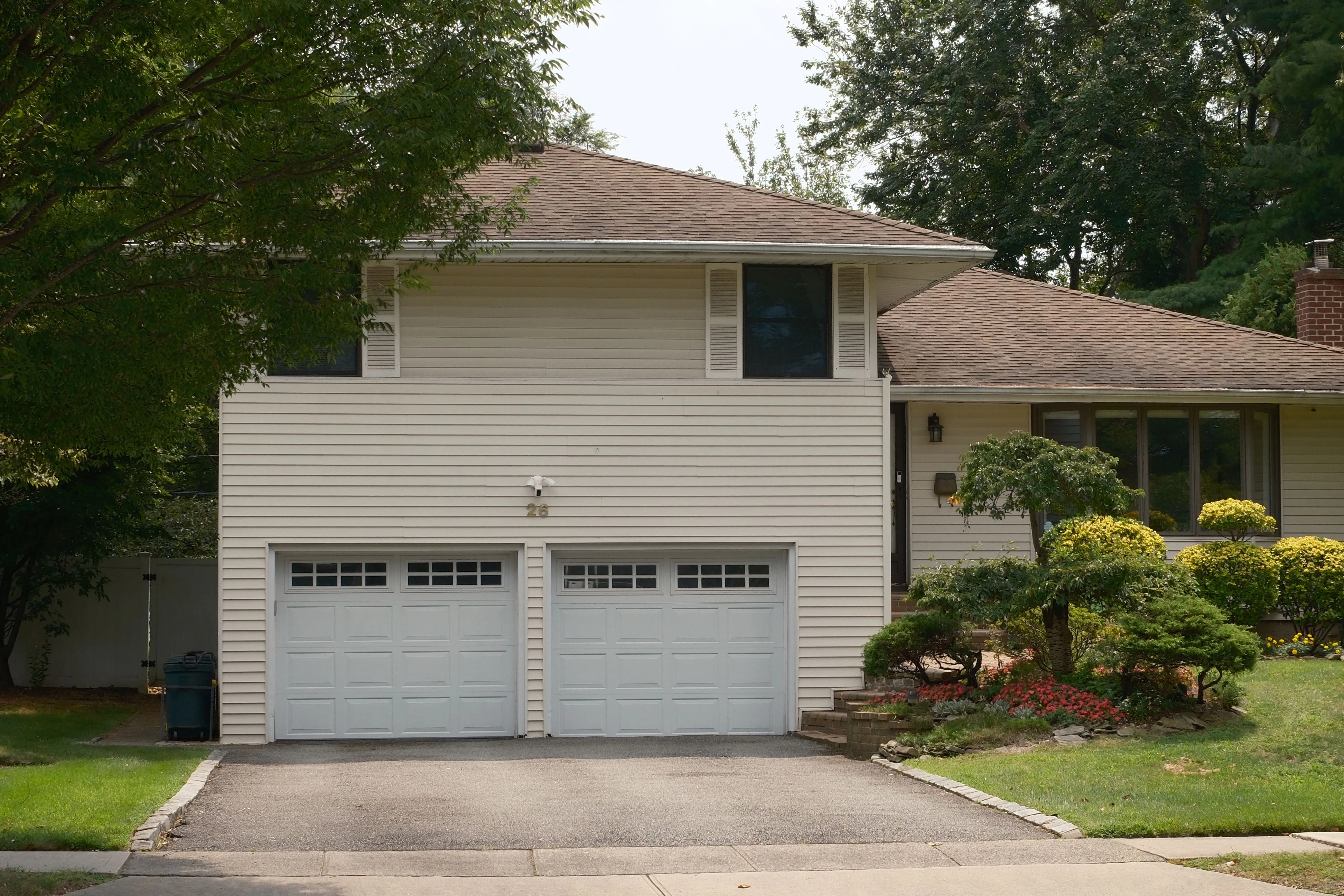
Most of the housing stock in this part of Beaumont went up between 1966 and 1998, with the median right around 1978. That means a lot of track hardware bolted to a lot of houses is now pushing forty, fifty, even close to sixty years old in the oldest pockets. Galvanized steel track holds up fine under normal use, but the mounting screws and jamb brackets don't get the same lifespan, especially once a house has been through decades of that mild-with-occasional-freeze cycle described above. On the occasional freeze night this area does get, the steel contracts just enough to work a loose screw looser.
Do that enough winters in a row and a bracket that was solid in 1978 is now sitting a sixteenth of an inch off true. That's plenty for a roller to walk out of the track under normal opening and closing. This isn't a defect in the original build - it's just what forty-plus years of thermal cycling does to old fasteners.
What we find
The Problem
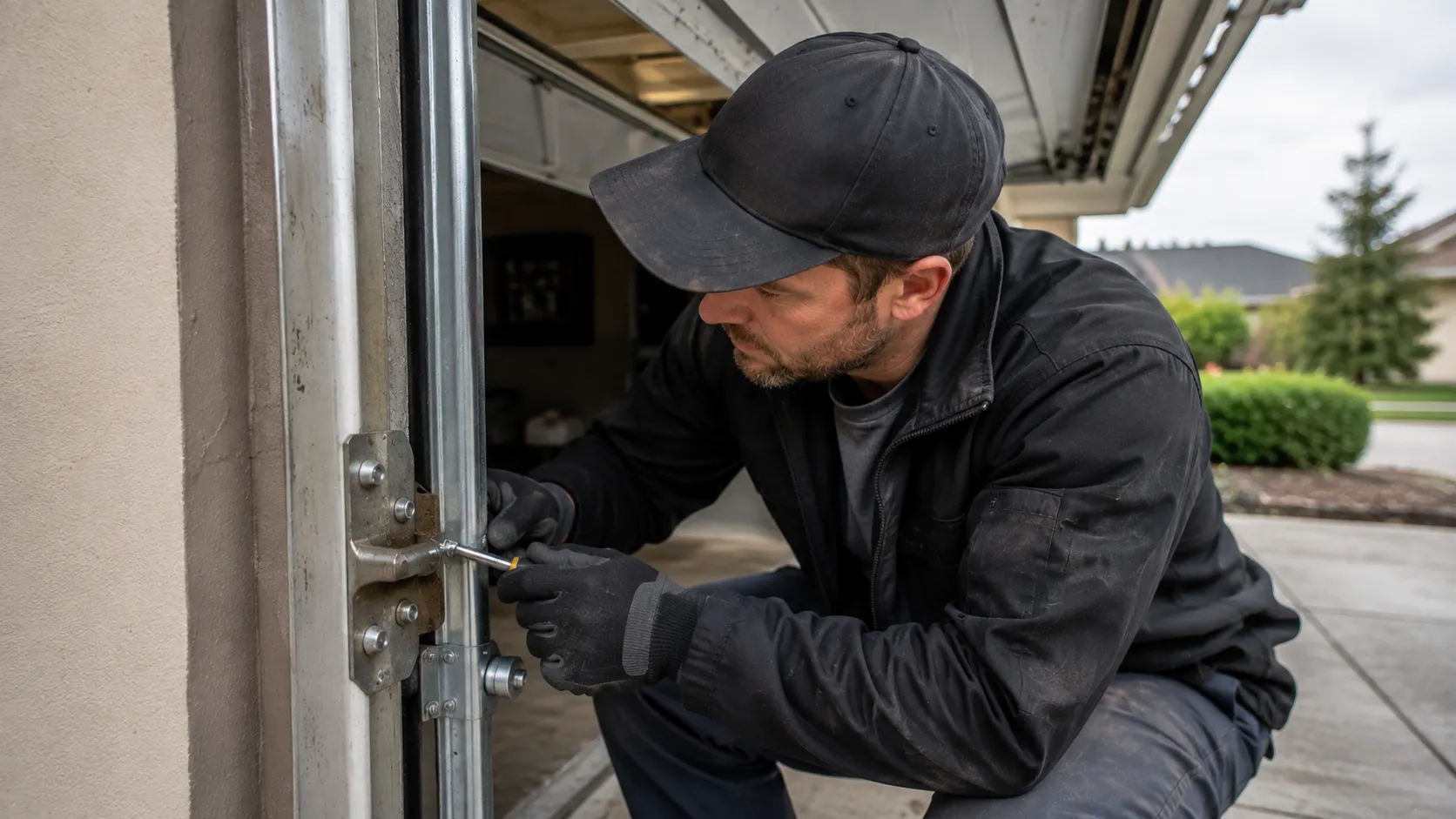
An off-track door is almost never one single failure. It's usually a bracket that's been slowly working loose for years, plus a roller that's worn down enough to lose its grip on the track's edge, plus a small misalignment nobody noticed because the door kept working right up until it didn't. On the older end of Beaumont's housing stock - the 1966-1998 wave that makes up most of the neighborhoods here - we see the same pattern: original track, original brackets, a roller finally giving out after decades of use.
The door doesn't jump off the track because of one bad day of weather. It jumps because the hardware has been drifting out of tolerance since roughly the Carter administration, and the freeze-thaw cycling here just keeps nudging it along. One honest limit: if the track itself is bent, not just loose, we don't try to bend it back into alignment.
A bent track gets replaced. Bending it straight might hold for a few weeks, but it puts uneven stress back on the rollers and you're calling us again by summer.
How we work
Where People Go Wrong
The most common mistake is treating a door that's rubbing or catching as a lubrication problem. Spraying the track doesn't fix a loose bracket, and it won't stop a roller that's already worn thin from walking further off the rail. The second mistake is waiting.
A door that's mildly off track can still open and close, which makes it easy to ignore until the day it doesn't come down at all, or comes down crooked and jams a cable. Given how much of the housing across this area - from the Oaks Historic District two miles east to Vidor Ward 6 eight miles out - shares that same 1966-1998 track hardware, we see the same story on repeat: small drift, ignored for a year or two, then a full off-track call on a Saturday. Tightening the brackets and checking roller wear once every few years costs a lot less than an emergency call after the door comes down wrong.
Questions
Common questions
Why did my garage door suddenly jump off the track with no warning?
It rarely happens with no warning - it's usually a bracket that's been loosening for years, especially in Beaumont's older housing stock, combined with a worn roller. The last straw is often a normal open-close cycle, not anything unusual that day.
Does Beaumont's weather really affect garage door tracks?
The mild climate here with occasional freezes puts steel track through a repeating expansion-contraction cycle. It's not dramatic on any single day, but over decades on original hardware from the 1966-1998 building era, it loosens screws and shifts brackets enough to cause problems.
Can a bent track be straightened instead of replaced?
Sometimes it holds for a while, but bending it back puts uneven stress on the rollers and usually fails again within months. If the track is actually bent rather than just loose, we replace it rather than bend it back.
How do I know if my door is at risk of going off track?
Watch for a roller that squeals or catches near the top of the track, or a door that seems to shudder slightly as it moves. On houses from the older Beaumont building era, loose brackets are the most common early sign.
Ready when you are
Need a garage door sorted in Beaumont?
Beaumont Garage Door Pros repairs and installs garage doors, springs and openers in Beaumont, TX and the surrounding area.